
The Quiet After
When the Storm Has Passed but the Debris Remains

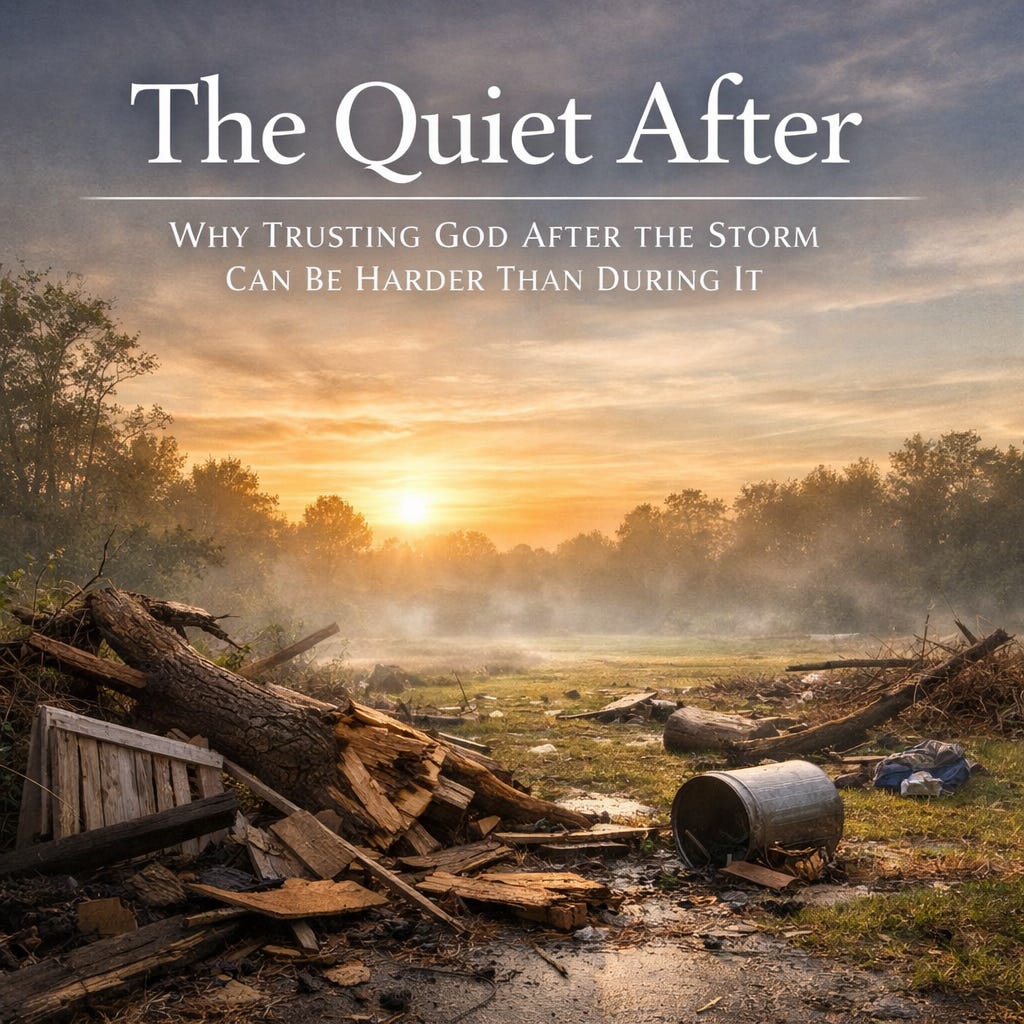
I had a vision a few days ago that I feel compelled to share because it was the first one I have had in a long while, and because I think it will be meaningful to many of our readers.
I was standing outside in my front yard, and as I looked around, all I saw was debris, garbage, fallen trees, and tree limbs, it looked as if a hurricane or tornado had come through the neighborhood. But everything else, like the weather, was beautiful, pristine.
I felt God speaking deeply to me at my soul level. He told me the storm had already passed, but I was afraid to step out into the new season because when I looked outside I didn’t see the beautiful weather, but rather I still saw all the evidence of the storm passing through.
It hit me on so many levels because I have recently come to a new level acceptance of the adversity and trauma of the past three years. And with that new level of acceptance came new levels of understanding, and even forgiveness.
But when I think about the vision, I started discovering deeper patterns of fear and doubt because as much as I trusted God in the storm, I am having to trust Him even more after it.
And the revelation is…trusting after the storm is a new challenge for me. Looking back, trusting God in the storm was a no-brainer, there was literally no choice. But after the storm…it’s quiet. And your world still has debris, even though it’s over, the evidence of the loss can still be overwhelming if you let it.
Let’s also be real, people talk about the calm of the storm, but after the storm comes the quiet. At first, I thought God had been quiet. It wasn’t the case. I found I had to get quieter than ever before to hear Him.
I don’t think I am the only one that needs to hear this, so if you can relate. If you have been through the storm and are still trying to figure out the clean-up and what’s next, you may have to get really, really quiet.
Sean,
Many of us expect the test of faith to be during the storm, yet Scripture often shows that the quieter aftermath can require just as much trust. Elijah encountered God not in the wind, earthquake, or fire, but in the “still small voice” (1 Kings 19:12). Sometimes the storm gets our attention, but the quiet requires our surrender.
I appreciate your honesty about the debris. Healing rarely means instant restoration; often it looks like gradual rebuilding. Even after Israel crossed the Red Sea, they still had a wilderness to walk through. The deliverance was real, but the formation took time. That doesn’t mean God is absent; it often means He’s working more deeply.
You asked whether others relate, absolutely. Many of us have trusted God in crisis because we had no alternative. Trusting Him afterward, when life is calmer, but scars remain, can feel strangely harder. That’s where practices like stillness, prayer, Scripture meditation, and community become anchors. Psalm 46:10 reminds us: “Be still, and know that I am God.” Stillness isn’t passivity, it’s attentive trust.
Thank you for sharing this vision. It’s a gentle reminder that the storm passing doesn’t mean God stops speaking; sometimes it means He invites us closer, quieter, and deeper into His presence while the rebuilding happens.
Blessings,
Ze Selassie